 Of Music
Benefits of Music in Child Development
 adminjm
Singing and music play an important role in our culture. You’ll find music present in many aspects of our lives: theater, television, movies, worship, holidays, celebrations, and government and military ceremonies. At home, music can become part of our family cultures—a natural part of our everyday experiences.
From birth, parents instinctively use music to calm and soothe children, to express love and joy, and to engage and interact. Parents can build on these natural instincts by learning how music can impact child development, improve social skills, and benefit children of all ages.
MUSIC AND THE BRAIN: THE BENEFITS OF MUSIC
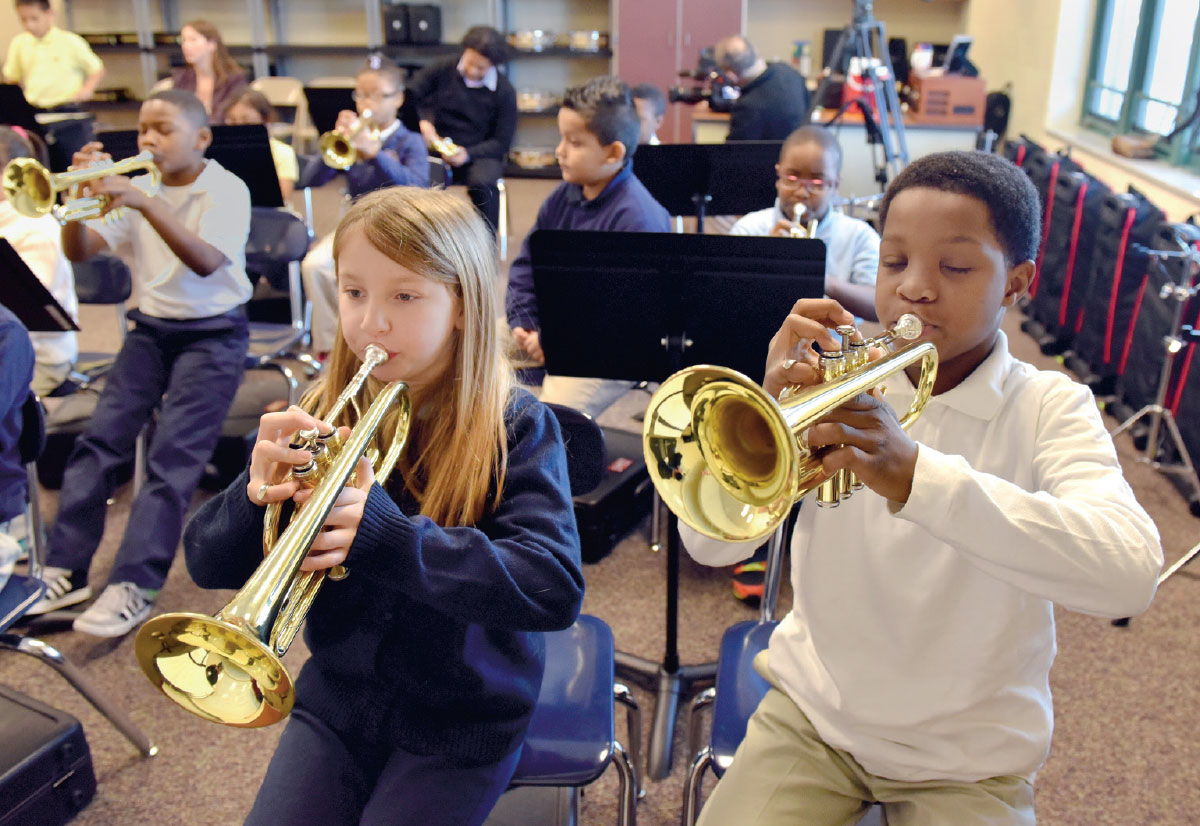
A 2016 study at the University of Southern California’s Brain and Creativity Institute found that musical experiences in childhood can actually accelerate brain development, particularly in the areas of language acquisition and reading skills. According to the National Association of Music Merchants Foundation (NAMM Foundation), learning to play an instrument can improve mathematical learning and even increase SAT scores.
But academic achievement isn’t the only benefit of music education and exposure. Music ignites all areas of child development and skills for school readiness, including intellectual, social-emotional, motor, language, and overall literacy. It helps the body and the mind work together. Exposing children to music during early development helps them learn the sounds and meanings of words. Dancing to music helps children build motor skills while allowing them to practice self-expression. For children and adults, music helps strengthen memory skills.
In addition to the developmental benefits, simply put: music bring us joy. Just think about listening to a good song in the car with the window down on a beautiful day. That’s joy.
MUSIC GAMES FOR KIDS OF ALL AGES
Children of all ages express themselves through music. Even young infants sway, bounce, or move their hands in response to music. Many preschoolers make up songs and, with no self-consciousness, sing to themselves as they play. Children in elementary school learn to sing together as a group and possibly learn to play a musical instrument. Older children dance to the music of their favorite bands, and use music to form friendships and share feelings. Try these activities and games with your children to experience the pleasure and learning that music brings.
Infants and Music: Infants recognize the melody of a song long before they understand the words. Quiet, background music can be soothing for infants, especially at sleep time. Loud background music may overstimulate an infant by raising the noise level of the room. Sing simple, short songs to infants. Try making up one or two lines about bathing, dressing, or eating to sing to them while you do these activities. Find more musical learning activities for infants.
